Albino Ferrets
Updated October 2026 · By the Adopt a Ferret team
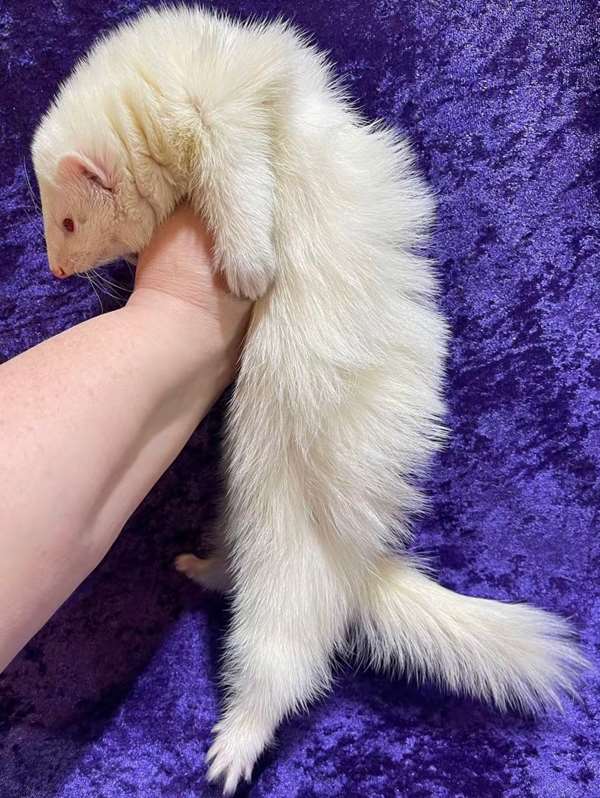
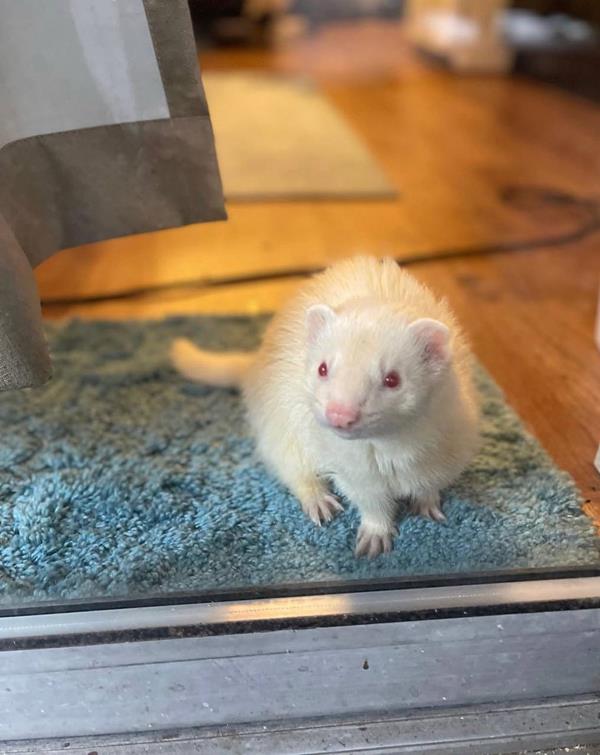
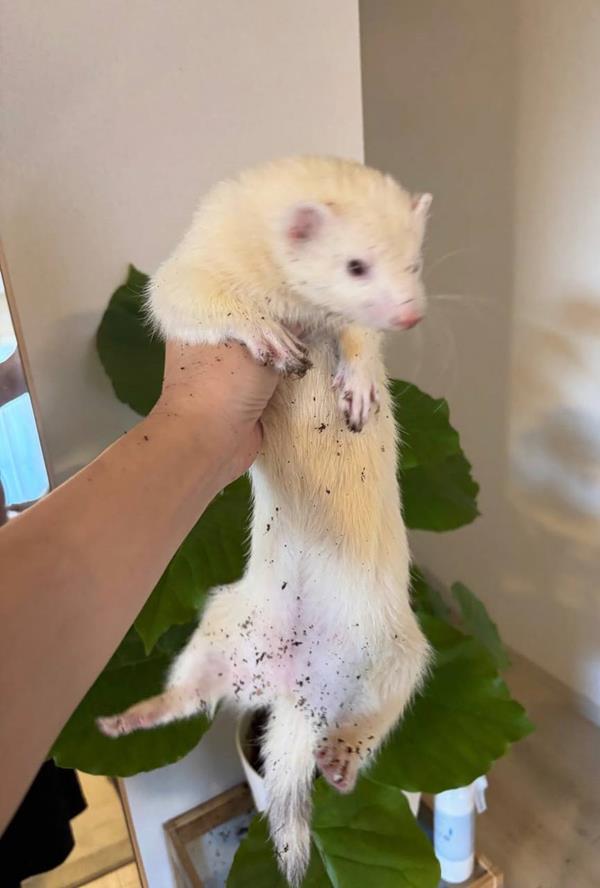
An albino ferret has a white to cream coat, a pink nose and ruby or pink eyes. Albinism means the body makes no pigment at all. It's a genetic color, not a pattern, and it has no effect on a ferret's personality or lifespan. We have 3 albino ferrets looking for homes right now.
What does an albino ferret look like?
- Coat: white to cream all over, with no mask and no darker legs or tail.
- Eyes: ruby, pink or light red. They can look bright red in photos taken with a flash.
- Nose and paw pads: pink.
Albino coats often pick up a creamy or yellowish tint from the ferret's natural skin oils, most noticeably on intact males in breeding season. That's normal. Bathing more often makes it worse, because the skin produces more oil to compensate.
Albino vs. dark-eyed white ferrets
| Albino | Dark-eyed white | |
|---|---|---|
| Coat | White to cream | White to cream |
| Eyes | Ruby or pink | Dark burgundy or near-black |
| Cause | Albino gene (no pigment anywhere) | White-marking genes on a pigmented ferret |
| Hearing | Not linked to deafness | Some are partly or fully deaf |
The quickest way to tell them apart is to look at the eyes in normal daylight.
Where albino kits come from
Albinism is recessive, so an albino kit needs the gene from both parents, even if neither parent is albino. Our albinos are a good example: they come from our sable sire Clyde, with our chocolate dam Mocha and our dark-eyed white dam Freckles.
Do albino ferrets need special care?
Mostly no. Feed, house and handle them like any ferret. Many owners find albinos a little more sensitive to bright light, so keep the cage out of direct sunlight and give them dark, cozy sleeping spots, which ferrets love anyway. Like all ferrets, they rely much more on smell and hearing than on eyesight.